
10 best Natural remedies for acne scars are one of the most searched beauty topics today, and for a good reason. Acne breakouts are tough, but the scars they leave behind can feel even tougher to deal with. If you’ve ever looked in the mirror and felt frustrated by dark spots, pitted scars, or lingering marks, you’re not alone. The good news? There are safe, affordable, and effective natural remedies for acne scars that can help your skin heal gradually.
Instead of spending thousands on harsh chemical treatments, you can often find solutions right in your kitchen. These home remedies are not only gentle but also packed with skin-healing properties that support a glowing, healthy complexion. In this article, we’ll explore the 10 best natural remedies for acne scars that have worked for many and could work for you too.
What Causes Acne Scars?
Before we dive into remedies, it’s important to first understand why acne scars happen. Acne isn’t just a cosmetic issue — it’s a chronic inflammatory skin condition that can affect both the surface and deeper layers of the skin.
When a pimple forms, your body identifies it as a small wound. In response, your immune system activates its healing process, which involves fighting bacteria, reducing inflammation, and repairing damaged tissue. During this repair phase, the body produces collagen, a structural protein that keeps skin smooth and firm.
But here’s the catch — the amount and quality of collagen produced during healing determines whether you’ll be left with scars or not.
Too Little Collagen → Atrophic Scars
When the body doesn’t produce enough collagen during healing, the skin fails to completely repair itself. This leaves behind tiny indentations or pits, commonly referred to as atrophic scars. These are the most common type of acne scars and can appear in different shapes:
- Ice-pick scars: Deep, narrow holes that look like small punctures.
- Boxcar scars: Broader depressions with sharp edges, often found on cheeks.
- Rolling scars: Wavy, uneven texture caused by tethered skin beneath the surface.
Too Much Collagen → Hypertrophic or Raised Scars
In some cases, the body overproduces collagen as it tries to repair the wound. Instead of filling in smoothly, excess collagen builds up, creating raised scars (also called hypertrophic scars). These are less common in facial acne but often appear on the chest, back, or shoulders, where skin tension is higher.
Post-Inflammatory Hyperpigmentation (PIH)
Not all acne after-effects are true scars. Many times, pimples leave behind dark spots or red marks, which are a result of increased melanin production after inflammation. This is known as post-inflammatory hyperpigmentation. Unlike atrophic or raised scars, PIH usually fades over time — but it can take weeks or even months without proper care.
Why Some People Scar More Than Others
- Genetics: If acne scarring runs in your family, you’re more likely to develop scars.
- Type of Acne: Deep, cystic acne is far more likely to scar compared to small whiteheads or blackheads.
- Skin Type & Tone: Darker skin tones may experience more PIH due to higher melanin activity.
- Lifestyle Habits: Popping pimples, skipping sunscreen, or using harsh products can make scars worse.
The bottom line: Acne scars are a natural part of the skin’s healing response, but with the right care and consistent natural remedies for acne scars, you can reduce their visibility and restore smoother, healthier-looking skin.
Why Natural Remedies Work

Many people wonder: “Can something as simple as aloe vera, turmeric, or potato juice really improve scars?” The answer is yes — not instantly, but steadily over time. Natural remedies for acne scars work because they are loaded with skin-healing compounds such as antioxidants, vitamins, minerals, and plant enzymes that support the skin’s own repair process. Let’s break this down in detail:
1. Reducing Pigmentation
One of the most common after-effects of acne is dark spots or uneven skin tone. Natural ingredients like potato juice, lemon, turmeric, and aloe vera contain compounds that slow down melanin overproduction and gradually lighten scars. For example, potato contains catecholase enzymes that act like a gentle bleaching agent, while turmeric has curcumin, which reduces excess pigmentation.
2. Calming Inflammation
When acne heals, inflammation often lingers, making scars appear red, swollen, or irritated. Ingredients like honey, green tea, and rose water have natural anti-inflammatory and soothing properties. They reduce redness, minimize swelling, and prevent further irritation, allowing scars to heal in a calmer environment.
3. Stimulating Collagen Production
Collagen is the building block of healthy, smooth skin. Low collagen = pits and depressions; balanced collagen = repaired skin. Certain natural remedies — like aloe vera, vitamin E oil, and multani mitti packs — encourage your skin to produce collagen at a steady pace. This helps fill in indented scars and improve skin’s overall texture.
4. Encouraging Faster Cell Renewal
Dead skin cells can make scars look darker and more obvious. Natural exfoliants like gram flour, rice water, and apple cider vinegar (when diluted) gently remove dead cells and speed up skin cell turnover. This means your body replaces damaged cells with new, healthy ones more quickly, gradually fading scars.
5. Gentle, Affordable, and Sustainable
Unlike harsh chemical peels or laser treatments, kitchen remedies don’t shock your skin. They work gradually but safely, making them suitable for long-term use — especially for sensitive skin. Plus, they’re affordable, easily available, and sustainable, making natural skincare a win-win.
Important Note: While these remedies can significantly fade scars, they work best when paired with patience, consistency, and daily sun protection. They are not overnight miracles but natural boosters of your skin’s healing ability.
For more medical insights and dermatologist-backed guidance, check out this Healthline article on acne scars.
10 Best Natural Remedies for Acne Scars
Here are the top kitchen-friendly natural remedies for acne scars that you can safely try at home. Each of these ingredients has been used traditionally for skin care, and modern research backs their benefits too.
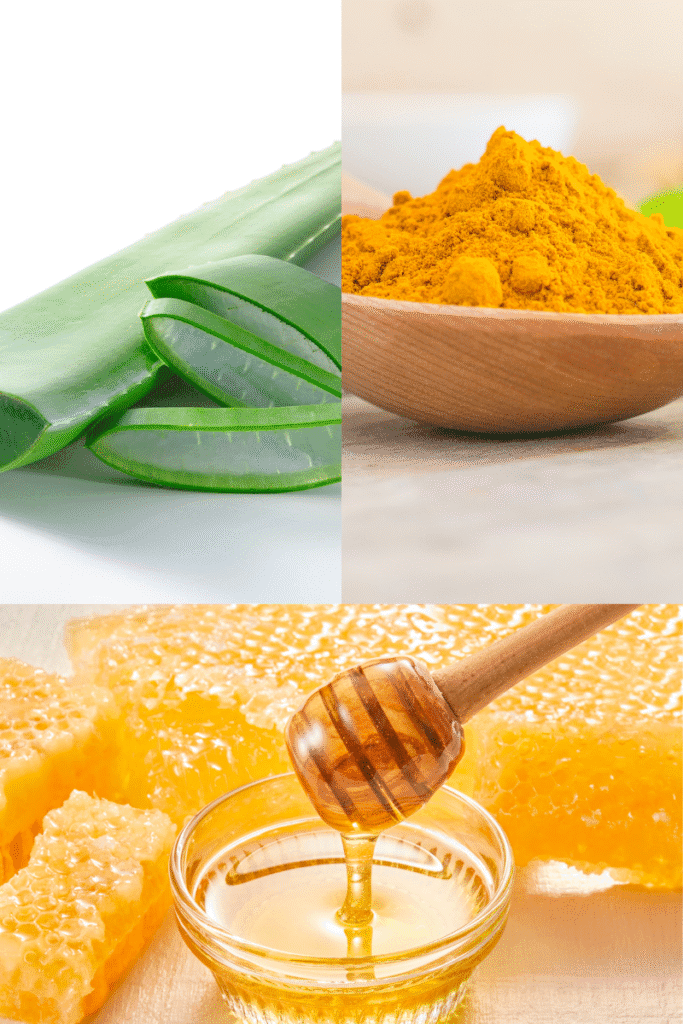
1. Aloe Vera Gel – Nature’s Skin Healer
Why it works:
Aloe vera has been called the “plant of immortality” for centuries — and for good reason. Its clear gel is rich in vitamins A, C, and E, along with enzymes and amino acids that help skin heal faster. The compound aloin, present in aloe, has strong depigmenting properties, making it one of the best natural remedies for acne scars. It doesn’t just fade scars but also improves skin texture, boosts collagen, and deeply hydrates.
How to use:
- Take a fresh aloe vera leaf, slice it open, and scoop out the gel.
- Apply a thin layer directly over acne scars.
- Leave it overnight for maximum absorption.
- Rinse with lukewarm water in the morning.
Extra tips:
- Mix a drop of vitamin E oil into the gel for faster scar healing.
- Keep the gel refrigerated — applying it cold reduces redness and puffiness.
2. Turmeric & Honey Paste – Golden Glow Combo
Why it works:
Turmeric is often called the golden spice in Ayurveda. It contains curcumin, an antioxidant and anti-inflammatory compound that reduces pigmentation and fights bacteria. Honey, on the other hand, is a natural humectant that locks in moisture and nourishes the skin. Together, they form a powerful healing mask that not only fades scars but also prevents future breakouts.
How to use:
- Mix 1 teaspoon of turmeric powder with 1 tablespoon of raw honey.
- Apply evenly on the scarred areas.
- Leave for 15 minutes and rinse with lukewarm water.
Extra tips:
- Always do a patch test first, as turmeric may stain skin.
- Use raw, organic honey for best results (processed honey has fewer nutrients).
3. Lemon Juice + Rose Water – Spot Lightener
Why it works:
Lemon is nature’s brightening agent. It contains citric acid and vitamin C, which lighten hyperpigmentation by reducing melanin buildup. Rose water balances the harshness of lemon by soothing irritation and keeping the skin hydrated. Together, they create a gentle blend to lighten acne scars over time.
How to use:
- Mix equal parts of freshly squeezed lemon juice and rose water.
- Dip a cotton pad into the mixture and dab on scars.
- Leave for 10 minutes, then rinse off.
Caution & tips:
- Always dilute lemon juice; undiluted juice can burn skin.
- Use this remedy only at night, as lemon increases sensitivity to sunlight.
- Always apply sunscreen the next morning.
4. Potato Juice – The Natural Brightener
Why it works:
Potatoes aren’t just for cooking — they’re also natural skin lighteners. They contain catecholase enzymes, which work like a gentle bleaching agent to fade dark spots. Potatoes also have vitamin C and starch, which brighten dull skin and help scars blend into the natural skin tone.
How to use:
- Grate a raw potato and extract the juice.
- Apply with a cotton ball directly over scars.
- Leave for 15–20 minutes and rinse with cool water.
Extra tips:
- For stronger results, mix potato juice with a few drops of lemon.
- Refrigerate the juice before applying — the coolness will calm irritated skin.
5. Multani Mitti (Fuller’s Earth) & Sandalwood Pack
Why it works:
A classic in Indian skincare routines, multani mitti is a clay that absorbs oil, toxins, and impurities from the skin. When mixed with sandalwood, it forms a cooling, healing mask that not only reduces acne scars but also tightens pores and brightens complexion. This is one of the most effective natural remedies for acne scars if your skin is oily or acne-prone.
How to use:
- Mix 2 tbsp of multani mitti with 1 tsp sandalwood powder.
- Add rose water to form a smooth paste.
- Apply on face and leave for 20 minutes.
- Rinse with lukewarm water.
Extra tip: Check out our detailed DIY on controlling oily skin with Multani Mitti & Neem.
6. Green Tea & Rice Water Toner
Why it works:
Green tea is loaded with catechins, powerful antioxidants that reduce inflammation and repair damaged skin cells. Rice water, on the other hand, is a traditional Asian beauty secret known for brightening and smoothing skin. Together, they make a refreshing toner that gradually reduces acne scars while improving skin texture.
How to use:
- Brew green tea and let it cool.
- Mix with an equal amount of fermented rice water.
- Store in a spray bottle and spritz daily as toner.
Extra tips:
- Keep it refrigerated and use within 4–5 days.
- Apply twice a day after cleansing for best results.
7. Coconut Oil Massage – Natural Moisturizer
Why it works:
Coconut oil is a natural emollient packed with fatty acids, antioxidants, and vitamin E. It penetrates deep into the skin, repairing damaged tissue and restoring elasticity. Regular massage improves blood circulation, helping scars fade faster.
How to use:
- Warm 1 tsp of virgin coconut oil.
- Massage gently into scars for 5 minutes.
- Leave overnight.
Caution & tips:
- Avoid if you have oily or acne-prone skin, as it may clog pores.
- For dry or normal skin, mix coconut oil with a drop of lavender oil for added healing.
8. Apple Cider Vinegar Toner
Why it works:
Apple cider vinegar (ACV) contains acetic acid, which gently exfoliates skin, balances pH, and reduces pigmentation. It also has antibacterial properties that prevent new breakouts.
How to use:
- Dilute 1 part ACV with 3 parts water.
- Apply on scars using a cotton ball.
- Leave for 5 minutes and rinse.
Extra tips:
- Use only 2–3 times a week.
- Never apply undiluted ACV — it’s too harsh for skin.
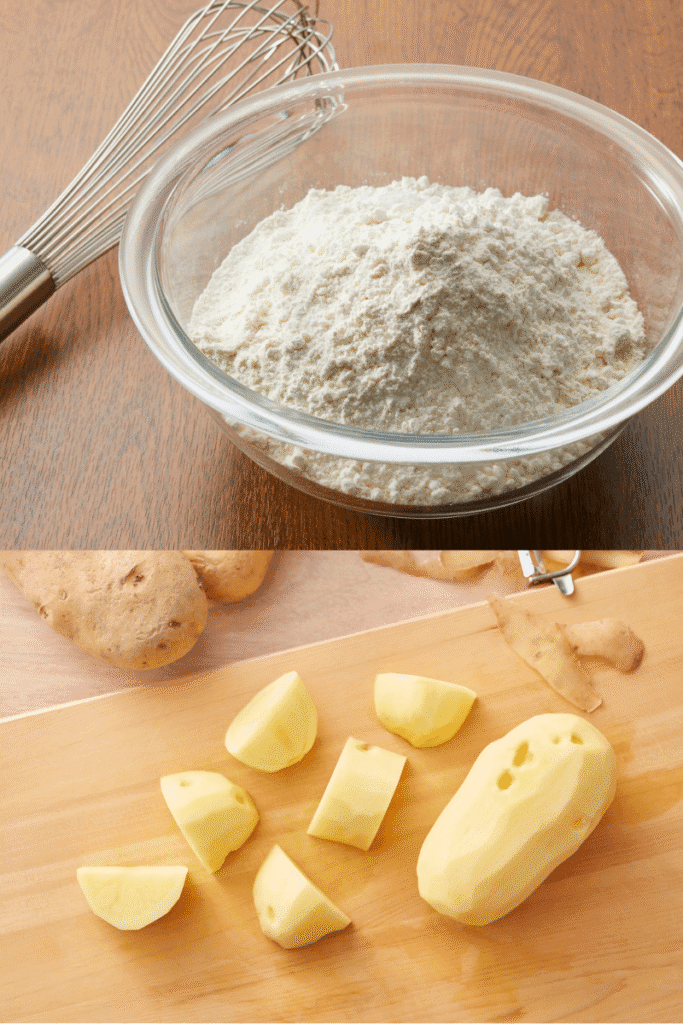
9. Gram Flour (Besan) Face Pack
Why it works:
Gram flour has been used for centuries in Indian skincare rituals. It gently exfoliates, removes dead cells, and lightens pigmentation. Combined with milk or yogurt, it nourishes skin while fading scars.
How to use:
- Mix 2 tbsp gram flour with 2 tbsp milk or yogurt.
- Apply as a face pack for 15–20 minutes.
- Wash off with lukewarm water.
Extra tips:
- Add a pinch of turmeric for extra scar-fading power.
- Use 2–3 times a week for visible results.
10. Vitamin E Capsule Mask
Why it works:
Vitamin E is a skin-healing powerhouse. It improves elasticity, reduces pigmentation, and accelerates skin repair. When massaged into scars, it nourishes the skin deeply, helping scars fade faster.
How to use:
- Break open a vitamin E capsule.
- Apply oil directly on scars and massage gently.
- Leave overnight for absorption.
Extra tips:
Use 3–4 times a week for best results.or a lightweight texture and faster results.
Mix vitamin E with aloe vera gel for lighter, non-greasy application.
Quick Comparison of Natural Remedies for Acne Scars
| Remedy | Best For | How Often to Use | Extra Tip |
|---|---|---|---|
| Aloe Vera Gel | All skin types, soothing fresh scars | Daily (overnight) | Mix with vitamin E for faster healing |
| Turmeric & Honey Paste | Redness, inflammation, early scars | 2–3 times per week | Patch test first, turmeric may stain |
| Lemon + Rose Water | Dark spots & pigmentation (oily skin) | 1–2 times per week (night only) | Always apply sunscreen next day |
| Potato Juice | Dull skin, brown marks | 3–4 times per week | Refrigerate for a cooling effect |
| Multani Mitti + Sandalwood | Oily, acne-prone skin with scars | 2–3 times per week | Also tightens pores & prevents new pimples |
| Green Tea + Rice Water Toner | Uneven tone, mild scars, sensitive skin | Daily (morning & evening) | Store in fridge, use within 4–5 days |
| Coconut Oil Massage | Dry/normal skin, pitted scars | 3–4 times per week (overnight) | Avoid if oily or acne-prone |
| Apple Cider Vinegar Toner | Stubborn dark marks, exfoliation | 2 times per week | Always dilute before use |
| Gram Flour (Besan) Pack | Rough skin, tan, light scars | 2–3 times per week | Add turmeric for extra glow |
| Vitamin E Capsule | Deep scars, skin repair & elasticity | 3–4 times per week (overnight) | Mix with aloe for non-greasy feel |
Tips for Faster Healing
To get the most out of these natural remedies for acne scars, follow these tips:
- Be consistent: Natural remedies take 4–6 weeks of regular use.
- Apply sunscreen daily: UV exposure worsens scars and pigmentation.
- Eat nutrient-rich foods: Include vitamin C, zinc, and antioxidants in your diet.
- Stay hydrated: Water supports skin cell renewal.
- Don’t overdo it: Stick to 2–3 remedies at a time instead of trying everything at once.
What to Avoid When Treating Acne Scars
Even the best remedies can fail if mistakes are made. Avoid:
- Picking or popping pimples (this deepens scars).
- Using undiluted lemon juice directly on skin.
- Over-exfoliating, which irritates sensitive areas.
- Ignoring sun protection.
For a detailed medical perspective, you can also read this WebMD guide on acne scars.
Frequently Asked Questions about Natural Remedies for Acne Scars
1. Do natural remedies really work for acne scars?
Yes, natural remedies can definitely help improve acne scars, but they work gradually, not overnight. Ingredients like aloe vera, turmeric, honey, and potato juice are rich in antioxidants and vitamins that repair skin cells and reduce pigmentation. They won’t erase scars in a few days, but with consistent use over weeks, they can lighten marks, smooth skin texture, and make scars less visible. Many people prefer them because they are gentle, affordable, and safe compared to chemical treatments.
2. How long do natural remedies take to fade acne scars?
Patience is key. Most natural remedies for acne scars show noticeable results in 4–6 weeks of regular use. Some ingredients, like lemon or potato juice, may give quicker brightening effects, while others, like aloe vera or vitamin E, work more slowly but deeply repair skin. Remember, everyone’s skin is different — consistency and sun protection will make the biggest difference.
3. Which natural remedy is best for deep acne scars?
For deep or pitted scars, remedies that boost collagen production work best. Aloe vera gel, vitamin E oil, and multani mitti face packs are especially effective. These help the skin rebuild its structure over time, making indentations look shallower. However, very deep scars may need professional treatments (like microneedling or laser) along with natural remedies for best results.
4. Can I use lemon juice directly on acne scars?
It’s not recommended to use lemon juice directly on your skin. Lemon is very acidic and can cause irritation, redness, or even burns when applied undiluted. Instead, always dilute lemon juice with rose water or honey before applying. Use it only at night, and make sure to wear sunscreen the next morning, since lemon makes your skin more sensitive to sunlight.
5. Do I need sunscreen while treating acne scars?
Yes — sunscreen is a must if you want acne scars to fade. UV rays darken pigmentation and make scars more visible. Even the best natural remedies for acne scars won’t help much if you skip sun protection. Choose a lightweight, broad-spectrum sunscreen (SPF 30+) and apply it daily, even indoors or on cloudy days. This one habit will double the effectiveness of your home remedies.
Acne scars may take time to fade, but with patience and consistency, natural remedies for acne scars can truly transform your skin over time. From soothing aloe vera gel to brightening potato juice, these simple remedies offer safe and affordable ways to heal scars naturally.
Remember — glowing skin is a journey, not a race. Treat your skin gently, listen to its needs, and results will follow with time.
Want even more DIY skincare recipes? Don’t miss our Kitchen Skincare Secrets eBook, packed with 19 exclusive remedies straight from your kitchen to your beauty routine.
Disclaimer:
The information provided on skincaresolutions.in is for informational purposes only and reflects personal/home remedies that are commonly used in skincare. It should not replace professional advice. Please do a patch test before trying any new ingredient. If you have sensitive skin, allergies, or medical conditions, consult a dermatologist before use.